Authentic Social Media Content 2026: Build Real Trust Authentic social media content 2026 is less about looking perfect and more about sounding …
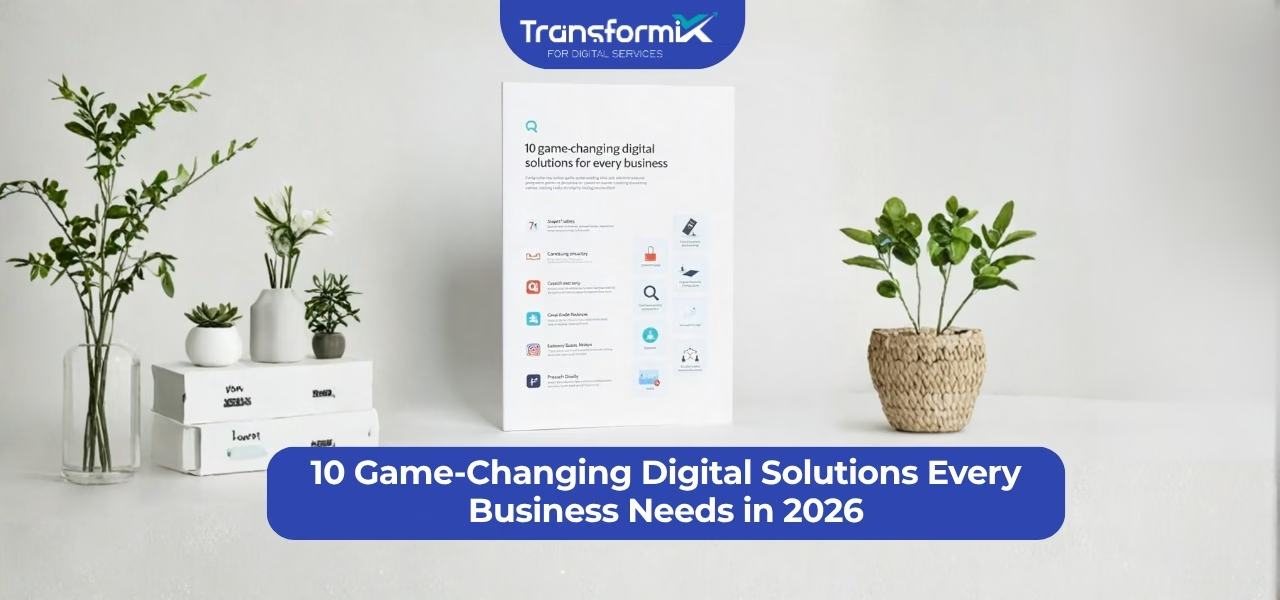
With over 70% of organizations now having a digital transformation strategy, the question is no longer if your business should adapt, but how. The essential digital solutions for business are the engines of modern growth, yet many companies struggle with disconnected workflows, missed customer opportunities, and crippling inefficiencies. If you’re feeling these pains, you’re not alone. This article cuts through the noise to spotlight the ten critical digital solutions that will not only solve these problems but also future-proof your operations for sustained success.
Digital solutions encompass the technologies, platforms, and strategies that businesses use to optimize operations, enhance customer experiences, and drive growth. These range from cloud-based software and automation tools to data analytics platforms and customer relationship management systems. The right digital solutions don’t just digitize existing processes—they reimagine how work gets done.
Before you can scale, you must streamline. The right technology creates a centralized, efficient core for your entire business.
Why are cloud solutions essential? They offer unmatched flexibility, security, and cost-efficiency by eliminating the need for expensive on-premise servers. Platforms like Microsoft Azure or Amazon Web Services allow your team to operate from anywhere, scaling resources up or down as needed. Best practice: Start by migrating one non-critical workload to test the waters before a full-scale transition.
A CRM is your command center for all customer interactions. It’s how you boost sales and customer retention by tracking every lead, conversation, and purchase. When choosing a CRM, a small business might thrive with an intuitive platform like HubSpot, while a large enterprise may need the deep customization of Salesforce. Effective CRM integration with your existing marketing and sales tools is non-negotiable for a 360-degree customer view.
In the age of remote and hybrid work, tools like Asana, Trello, or Monday.com are vital. They provide a single source of truth for tasks, deadlines, and communication, enabling seamless remote team collaboration and workflow automation. This clarity minimizes errors and keeps everyone aligned, regardless of location.
With a solid foundation, you can focus on accelerating growth and creating exceptional customer experiences.
Imagine streamlining your entire digital marketing funnel. Tools like Mailchimp or Marketo handle repetitive tasks such as email campaigns, social media scheduling, and lead nurturing, allowing your team to focus on high-impact strategy. The benefits of email marketing automation alone—personalization at scale—can dramatically increase engagement and conversions.
A CRM is your command center for all customer interactions. It’s how you boost sales and customer retention by tracking every lead, conversation, and purchase. When choosing a CRM, a small business might thrive with an intuitive platform like HubSpot, while a large enterprise may need the deep customization of Salesforce. Effective CRM integration with your existing marketing and sales tools is non-negotiable for a 360-degree customer view.
AI-powered customer support is now a 24/7 reality. Implementing a chatbot on your website can handle common customer queries, generate leads by engaging visitors, and seamlessly pass complex issues to a human agent, drastically improving response times and efficiency.
Data is the new currency, and protecting it is paramount.
Stop guessing and start making data-driven business decisions. BI platforms like Tableau or Google Looker connect to your various data sources and create real-time, interactive dashboards. This allows you to track key metrics, spot trends, and uncover predictive analytics for strategic growth.
A single data breach can be catastrophic. Essential security measures include robust firewalls, endpoint protection, and, crucially, employee security training platforms. Adhering to compliance requirements like GDPR isn’t just about avoiding fines—it’s about building trust with your customers.
Feeling overwhelmed? Don’t be. The path to implementing these digital solutions for your business follows a clear roadmap: assess your current tech, identify your biggest pain points, research the right solutions for your scale, plan your implementation timeline, and finally, train your team while monitoring results.
By strategically adopting these ten solutions, you position your business to not just survive, but to thrive in a competitive digital landscape.
Authentic Social Media Content 2026: Build Real Trust Authentic social media content 2026 is less about looking perfect and more about sounding …
Social Media Marketing Strategy for Small Business: Your Roadmap to Growth in Saudi Arabia Posting randomly on Instagram or TikTok isn’t enough …
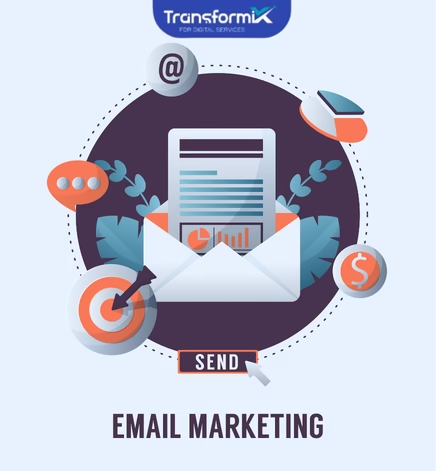
How to Write A Marketing Email: Your Blueprint for High-Converting Campaigns Every day, over 300 billion emails flood inboxes worldwide. In this …
The Search Game Has Changed—Forever Imagine this: A potential customer in Riyadh searches for “best marketing automation software.” Instead of a list …